


Full-size cargo vans are the go-to choice for full-time van lifers. They offer full standing height in high-roof configurations, spacious cargo volume, and flexible layouts, making long-term van life much more comfortable and practical.
Since you’re here, we’re guessing you’ve already decided a full-size cargo van is the right choice for your setup, but now you need help choosing the best model. In this guide, we’ll walk you through the key features to look for when buying a van, compare the most popular options, and highlight their strengths and limitations. We hope by the end of this guide, you’ll know exactly which one matches your budget, build plans, and lifestyle.
Best Full-Size Cargo Van Models for Van Life in 2026
Here are the five most popular full-size cargo vans that van lifers have been buying and converting for years:
- Mercedes-Benz Sprinter
- Ford Transit
- Ram ProMaster
- Nissan NV Cargo
- Chevrolet Express / GMC Savana
- Volkswagen Crafter
The Sprinter, Transit, and ProMaster are the most popular choices. The Sprinter and Transit are famous for their reliability, extensive aftermarket support, and available AWD/4×4 options. And the ProMaster is loved for its wide interior and lower price point. The Nissan NV Cargo stands out for solid reliability and affordable used prices. Chevrolet Express / GMC Savana as a low-roof alternative to Nissan NV. The Volkswagen Crafter is popular in Europe for its premium build quality and efficient diesel options.
All of these vans except the Nissan NV Cargo offer multiple roof and wheelbase options, giving you flexibility in interior height and cargo space. We’ll cover the exact roof heights and wheelbase details below.
Look Out For These Specs When Buying
At first glance, all full-size cargo vans look pretty similar — they’re tall and boxy work vehicles. But when you start planning a full-time van life conversion, small differences in standing height, wheelbase length, payload capacity, drivetrain options, and interior layout can make a difference in how comfortable, practical, and livable your build actually turns out to be.
Wheelbase Length
Wheelbase length one of the most important factors when choosing a full-size cargo van for van life. It directly affect how comfortable your layout feels and how easy the van is to drive day to day.
Shorter wheelbases are easier to maneuver and park — they have tighter turning radius and feel more like a large SUV. Longer wheelbases feel more stable on highways, but they’re harder to turn and park in cities or narrow campsites.
Pick a shorter wheelbase if you drive in cities a lot, but if you are confident with your driving skills you can still go for a longer wheelbase option. If you mostly drive on highways and avoid crowded cities then you can go for a longer wheelbase option without any worry.
Dimensions, Interior Space & Roof Height
Cargo volume, interior dimensions, and roof height play a huge role in how comfortable your van life setup will be. These factors determine whether you can fit a proper bed, kitchen, storage, or even a shower without the space feeling cramped.
Most full-size cargo vans offer multiple roof options — typically low or standard, high, and sometimes super high-roof. And depending on which roof option you pick max cargo volume and usable interior height can vary significantly.

Engine & Drivetrain
For van life, your choice of engine and drivetrain affects fuel costs on long hauls, traction on dirt or snow, and how practical the van is for off-grid living or heavy loads.
Gas engine: Most full-size cargo vans still offer traditional gas engines (V6 or V8) — they’re simple and have lower upfront costs. You’ll pay more at the pump on long trips compared to diesel or hybrid options, but repairs are straightforward and parts are easier to find.
Diesel engine: Diesel is the most popular choice for serious van lifers — better fuel economy, higher torque for loaded highway driving, and longer engine life. Available on Sprinter (2.0L or 3.0L), and Volkswagen Crafter (2.0L TDI turbo). But the diesel engine also come with complex mechanics that are harder to repair, and diesel emission systems are often problematic.
Hybrid & Electric engine: Hybrid options are rare but growing — Ford Transit has a mild-hybrid version (2026), and electric E-Transit/E-Sprinter models are available.
AWD / 4×4 Drivetrains: AWD or 4×4 is a game-changer for snow, rain, or light off-road. Mercedes Sprinter offers AWD and 4×4 (very popular), Ford Transit has AWD, Ram ProMaster has FWD only, and Nissan NV has RWD only. RWD and FWD are fine for city driving but slips more in bad weather.
Most van lifers choose diesel with AWD/4×4 for long-term travel and heavy builds. If you stick to pavement and want lower cost, gas with FWD or RWD is still a reliable option.
Trim Levels and Unnecessary Features
Cargo vans are built for work and commercial use, so they have fewer trim levels than passenger minivans — usually 2–5 options like base (Tradesman/Work Van), mid (XLT/SLT), and sometimes higher.
Higher trims often add touchscreen infotainment, power windows/locks, cruise control, rearview camera, nicer seats, or roof rails — nice for long highway trips but not essential for van life. Base or low trims give you a clean, affordable foundation: reliable engine, basic safety, and maximum usable space, leaving more budget for you conversion. Mid-level trims usually hit the best balance — they add practical upgrades like power windows and cruise control without wasting money on extras that add weight and cost.
So our recommendation would be to skip the highest trim unless you really want the extra comfort for long drives. Go for base or mid-level to keep things affordable and flexible for your build.
Ground Clearance
Most full-size cargo vans have ground clearance between 6–9 inches (unloaded), which drops 0.5–1 inch when you add weight. Low ground clearance causes bottoming out on forest service roads, hitting the underbody or exhaust on roots/rocks, or getting stuck in snow/mud without good traction or tires.
Payload Capacity & Weight Limit
Payload capacity is one of the most important numbers to check when buying a van for van life. It tells you exactly how much extra weight the van can safely carry, without overloading the suspension, brakes, or tires. Pick higher-rated models if your setup will be heavy — otherwise, any of these will handle a typical van life build just fine.
Mercedes-Benz Sprinter

The Mercedes-Benz Sprinter is widely considered the gold standard for full-time van life conversions. It offers excellent versatility with multiple wheelbases and roof heights.
Older Sprinters were available with both gas and diesel engines, but newer models (2024 and later) come with diesel only. Its standard option includes rear-wheel drive now and AWD on more premium options — older models offered 4×4, which has now been replaced by AWD since 2023.
Why Van Lifers Choose the Sprinter
Sprinter’s efficiency and aftermarket ecosystem are the biggest reasons why people choose it. Its resale value is also one of the strongest in this category. Even high-mileage Sprinters tend to hold their value well, which helps offset the higher upfront cost over time.
And its diesel engine delivers better fuel efficiency on long highway drives and handles heavy builds more comfortably than most gas alternatives. Its efficiency becomes especially noticeable if you’re traveling full-time or covering long distances regularly. On top of that, AWD (and older 4×4 models) adds another layer of flexibility for van lifers who deal with snow, rain, or rougher access roads.
Also, since the Sprinter is so widely used, you’ll find more build guides, conversion kits, replacement parts, and community support than almost any other van.
Real World Drawbacks of The Sprinter You Should Know About
A very serious concern with modern diesel Sprinters is the emissions system. Many long-term owners report recurring issues with components like the DPF (diesel particulate filter), DEF/AdBlue system, and related sensors. These systems can trigger limp mode, especially if the van is driven short distances frequently or idled often.
Also its maintenance and repairs are consistently more expensive than alternatives like the Transit or ProMaster. It runs on a complex computer system with many electronic controls. So, most independent mechanics won’t work on them. As a result, you often end up paying higher dealer prices for service and repairs. This becomes a bigger problem if you’re traveling in remote areas where dealership access is limited.
None of these are deal-breakers — but they are part of the real ownership experience and should be considered before committing.
Sprinter Specs:
- Wheelbase: 144″, 170″
- Roof options: Standard, high
- Max interior height: ~5’8″–7’0″ (depending on roof options)
- Cargo volume: ~319–532 cu ft (depending on wheelbase and roof options)
- Payload: ~3,000–6,800 lbs
- Ground clearance: ~6.9–7.5 inches
- Engine: 2.0L 4-cylinder turbo diesel, 3.0L V6 diesel (in older years)
- Drivetrain: RWD / AWD / 4×4 (older models)
- Fuel economy: ~18–24 MPG
Pricing (2026):
- New (low roof): $48,990–$62,000
- New (high roof): $55,000–$80,000+
- Used (2020–2024): $38,000–$70,000
- Used (2019–2022): $28,000–$50,000
- Used (2015–2018): $18,000–$35,000
Ford Transit
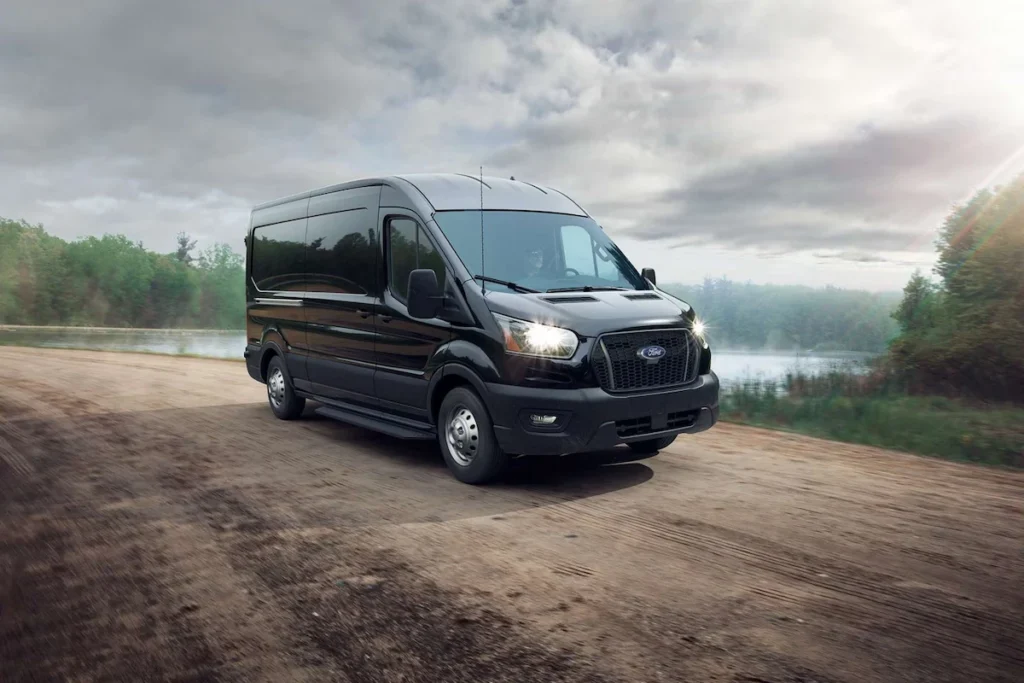
The Ford Transit is currently the most popular full-size cargo van for van life in North America. It combines excellent availability, the largest dealer/service network, huge configuration options, and strong aftermarket support.
Unlike the Sprinter, most Transits come with gas engines, though diesel options are available in older models. Standard models feature rear-wheel drive, while AWD is available on most trims from 2020 onward.
Why Van Lifers Choose the Transit
The Transit is much easier to own and maintain compared to the Sprinter. Parts are widely available, repairs are generally cheaper, and almost any mechanic can work on it. This makes a big difference for long-term travel, especially if you’re moving between cities or remote areas where dealership-only service isn’t practical.
Gas engines are another reason many van lifers choose the Transit. While they’re less fuel-efficient than diesel, they avoid the complexity of modern diesel emissions systems and tend to be more predictable for everyday use.
Overall, the Transit is often seen as the most balanced option for its good availability, lower ownership costs, and fewer restrictions when it comes to repairs and maintenance.
Real World Drawbacks of The Transit
Rust is a frequently discussed concern with used Ford Transits, but it’s highly dependent on where and how the van was used. Models that spend a lot of time in snowy regions or coastal environments tend to show more corrosion — especially around the underbody, subframe, wheel arches, and door areas. In some cases, this goes beyond surface rust and becomes structural. This issue isn’t actually unique to the Transit, any van can develop rust if not maintained properly. But since it’s a commonly discussed issue in forums and among transit owners, it’s worth keeping in mind.
Another concern that comes up frequently is the 10-speed automatic transmission in newer models (2020+). Some owners report problems like rough shifting, shudder, or premature failure, sometimes requiring expensive repairs. Older 6-speed models are generally considered more reliable.
Van lifers still consider the Transit one of the most practical and cost-effective choices. But these are the kinds of issues that come up repeatedly and are worth keeping in mind before making a decision.
Transit Specs:
- Wheelbase: 130″, 148″, 148″ extend
- Roof options: Low, medium, high
- Max interior height: ~5’8″–6’11” (depending on roof options)
- Cargo volume: ~280–487 cu ft (depending on wheelbase and roof options)
- Payload: ~2,500–4,600 lbs
- Ground clearance: ~6.5–8.7 inches
- Engine: 3.5L EcoBoost V6 or 3.5L V6 gas, Diesel (older models)
- Drivetrain: RWD / AWD
- Fuel economy: ~14–19 MPG (gas), ~18–22 MPG (diesel older models)
Pricing (2026):
- New (low roof): $42,000–$55,000
- New (high roof): $48,000–$75,000+
- Used (2020–2024): $32,000–$55,000
- Used (2018–2020): $22,000–$38,000
- Used (2015–2018): $15,000–$28,000
Ram ProMaster
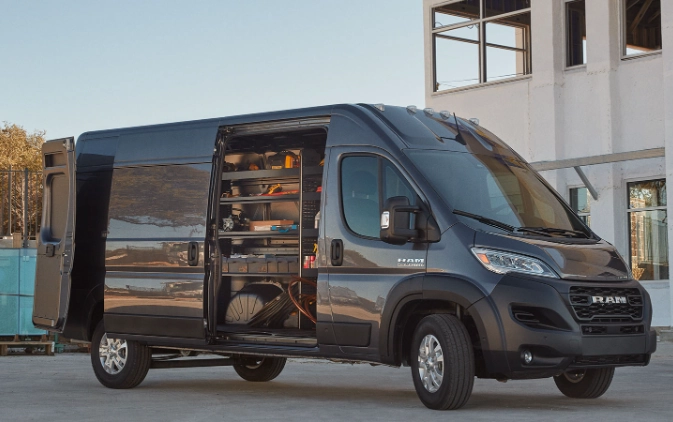
The Ram ProMaster is very popular for DIY van conversions, mainly because of its wide interior, simple design, and lower price compared to other full-size vans. It’s available in multiple wheelbases and high-roof configurations, but unlike competitors, it comes with front-wheel drive (FWD) only and no AWD or 4×4 options.
Most models are powered by the 3.6L Pentastar V6 gas engine, paired with an automatic transmission. While it lacks diesel efficiency or off-road capability, the ProMaster is famous for its practicality and ease of building.
Why Van Lifers Choose the ProMaster
The ProMaster comes with a wide, boxy interior that allows many people to sleep sideways without installing flares, which simplifies the build and saves both space and money. The flat walls and lower floor height also make it very beginner-friendly for DIY conversions.
Front-wheel drive is another reason some van lifers prefer it. In snowy or wet conditions, FWD can offer better traction than rear-wheel drive, especially when the van is not heavily loaded. It also eliminates the need for a driveshaft running to the rear, which helps keep the floor lower and more usable.
Cost is another major factor. The ProMaster is usually the most affordable full-size vans to buy, and parts are widely available and relatively inexpensive. Repairs can be handled by most mechanics, which makes long-term ownership simpler compared to more complex vans like the Sprinter.
Real-World Drawbacks of the ProMaster
The most talked-about issue with the ProMaster is its transmission, especially in pre-2022 models. Many owners report issues with the 62TE automatic transmission, including rough shifting, shuddering, and in some cases complete failure well before 100,000 miles. And repairs or replacements can cost $4k–$7k+. Now this issue is improved a lot in newer models (2022+), but the reputation of earlier versions still might affect your confidence.
The 3.6L Pentastar engine is pretty solid, but some owners report problems like coolant leaks, oil consumption, or cylinder head-related failures — especially in earlier model years.
The FWD layout also comes with some tradeoffs. While it helps in snow and lowers the floor height, it’s not ideal for rough terrain or off-road use. On uneven or loose surfaces, especially when heavily loaded, traction becomes a problem compared to AWD or 4×4 setups.
That said, many ProMaster owners still report high mileage and long-term usability with proper maintenance. Overall, it’s often seen as a practical and budget-friendly option—especially for DIY builders who prioritize interior space and simplicity over performance or off-road capability.
Ram ProMaster Specs:
- Wheelbase: 136″, 159″
- Roof options: Low, high
- Max interior height: 5’5″–7’1″ (depending on roof options)
- Cargo volume: ~304–463 cu ft (depending on wheelbase and roof options)
- Payload: ~3,500–4,680 lbs
- Ground clearance: ~6.9–7.9 inches
- Engine: 3.6L Pentastar V6 gas
- Drivetrain: FWD
- Fuel economy: ~15–18 MPG
Pricing (2026):
- New (low roof): $42,000–$55,000
- New (high roof): $45,000–$68,000+
- Used (2020–2024): $28,000–$48,000
- Used (2017–2020): $18,000–$32,000
- Used (2014–2017): $12,000–$25,000
Nissan NV Cargo
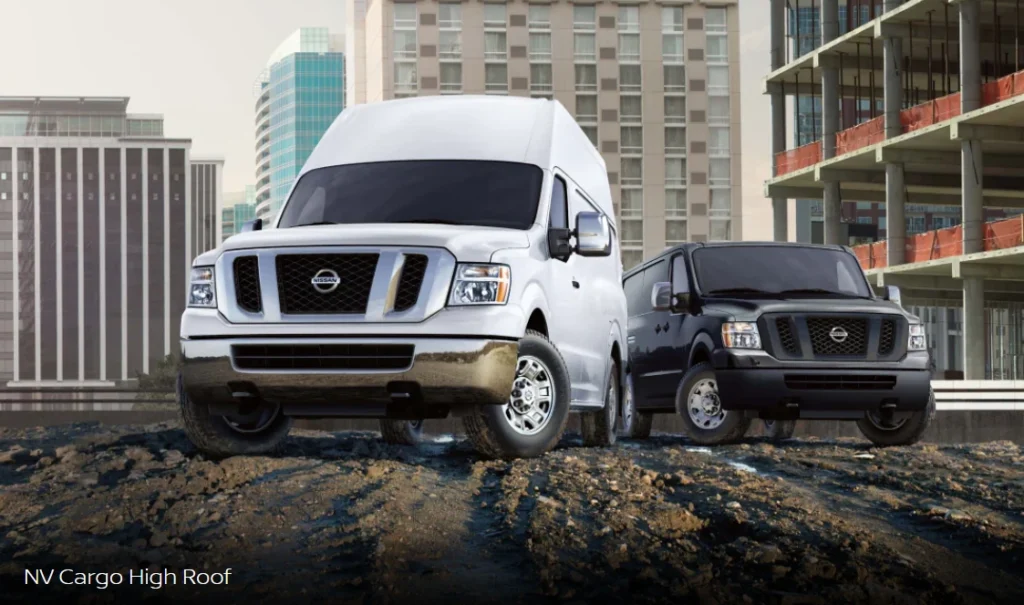
The Nissan NV Cargo is a less common choice for van life, mainly because it was discontinued in 2021 and is only available on the used market. It has a more traditional “truck-like” design compared to other vans, with a longer front nose and slightly less efficient use of interior space.
However, what it lacks in modern design, it makes up for in simplicity and durability. Many owners consider it one of the most reliable full-size vans, with a straightforward gas engine and fewer complex systems compared to newer competitors.
Why Van Lifers Choose the Nissan NV
The biggest reason people choose the NV is its reputation for reliability and simplicity. Unlike newer vans with complex electronics or diesel emissions systems, the NV uses proven gas engines (V6 and V8) that are easier to maintain and widely understood by mechanics. Many owners report high mileage with relatively few major mechanical issues, making it a dependable option for long-term use.
Some van lifers prefer its “truck-like” build for durability and strength, especially when carrying heavier loads. Repairs are generally straightforward, and most shops can work on it without any specialized tools or dealer involvement.
Used pricing is another advantage. Since the NV is discontinued and less in demand, it’s often more affordable than comparable Sprinter or Transit models.
Real-World Drawbacks of the Nissan NV
The biggest limitation of the NV is that it’s no longer in production. You can only buy it used, and over time, parts availability may become more limited or expensive compared to more common vans like the Transit or ProMaster.
Fuel economy is its most commonly mentioned downside. The V8 models in particular are known to be quite thirsty, especially on long highway drives or when fully loaded. Even the V6 struggles to match the efficiency of newer vans, which can add up significantly for full-time travel.
Other occasional concerns include cooling system problems or minor transmission quirks, but these are not widely seen as major reliability issues when the van is properly maintained.
Overall, the NV doesn’t have a single major “deal-breaker” issue like some other vans. Most owners describe it as solid and dependable, with the main tradeoffs being fuel economy, aging design, and long-term parts availability.
Nissan NV Cargo Specs:
- Wheelbase: 146″
- Roof options: High (no low option)
- Max interior height: ~6’5″
- Cargo volume: ~323 cu ft
- Payload: ~2,300–3,900 lbs
- Ground clearance: ~8.1–8.3 inches
- Engine: 4.0L V6 or optional 5.6L V8 gas
- Drivetrain: RWD
- Fuel economy: ~14–18 MPG
Pricing (2026):
- Used (2018–2021): $25,000–$40,000
- Used (2015–2018): $15,000–$30,000
- Used (2012–2015): $8,000–$20,000
Chevrolet Express / GMC Savana
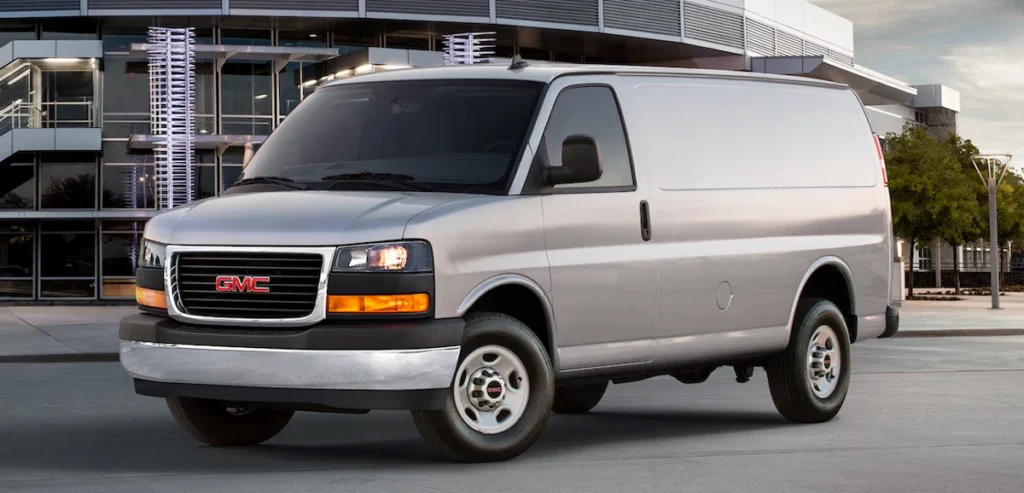
The Chevrolet Express and GMC Savana are actually the same van — just sold under two different GM brand names. They share identical engines, chassis, dimensions, and performance. The only differences are the grille, badging, and very minor trim details. Most van lifers shop both and pick whichever is cheaper or in better condition.
Why Van Lifers Choose the Express/Savana
In many ways, the Express and Savana appeal to van lifers for the same reasons as the Nissan NV. The Chevrolet Express and GMC Savana are some of the longest-running cargo vans on the market, and they’ve built a strong reputation for durability.
They’re known for simple, proven gas engines, straightforward mechanics, and long-term durability. You don’t have to deal with complex electronics or diesel emissions systems, and most repairs can be handled by any local shop.
Another reason many van lifers choose the Savana/Express over the Nissan NV is roof config. The Savana/Express come with only a low-roof config. So van lifers who want a more stealthy set-up choose these vans.
Also unlike the Nissan NV these vans are still in production. That means newer model options, better parts availability going forward, and less uncertainty if you’re planning to keep the van for years.
Real World Drawbacks of the Express/Savana
Like the Nissan NV, the Express and Savana don’t have a single widespread issue. The problems that do come up are usually related to age, wear, or basic maintenance rather than sudden major failures.
The biggest downside is fuel economy. These vans are built with older, large gas engines, and once you add a full camper setup, mileage typically drops into the 12–16 mpg range. If you’re traveling long distances regularly, fuel costs can add up quickly compared to more modern vans.
Another thing that comes up fairly often is brake wear. Because of the van’s weight and rear-wheel-drive setup, pads and rotors tend to wear out faster than expected, so you may find yourself replacing them more frequently as part of regular maintenance.
The driving experience is also more “old-school” compared to newer vans. The ride can feel stiff or bouncy, and road noise is more noticeable, especially on highways.
Overall, the Express and Savana are usually chosen by people who want a proven, durable full-size van with fewer long-term ownership concerns — especially now that similar alternatives like the NV are no longer in production.
Chevrolet Express / GMC Savana Specs
- Engine: 4.3L V6 or optional 6.6L V8 — same basic lineup since 2010; older models (1996–2009) had 4.3L V6 or 5.7L V8
- Drivetrain: RWD only
- Fuel economy: ~15–20 MPG (4.3L V6), ~12–16 MPG (6.6L V8)
- Cargo volume: ~313 cu ft
- Wheelbase: 135 inches (regular) or 159 inches (extended)
- Interior length: ~128 inches–178 inches (depending on wheelbase)
- Interior width: ~72.8 inches
- Interior height: ~52–53 inches
- Ground clearance: ~6.5 inches
- Payload: ~2,500–3,500 lbs
Pricing (2026)
- New: $42,200 – $44,595
- Low-mileage (under 80,000 miles, 2020–2025 models): $25,000–$40,000
- Mid-mileage (80,000–150,000 miles, 2015–2020): $15,000–$28,000
- Higher-mileage or older (150,000+ miles, 2010–2015): $8,000–$18,000
Volkswagen Crafter
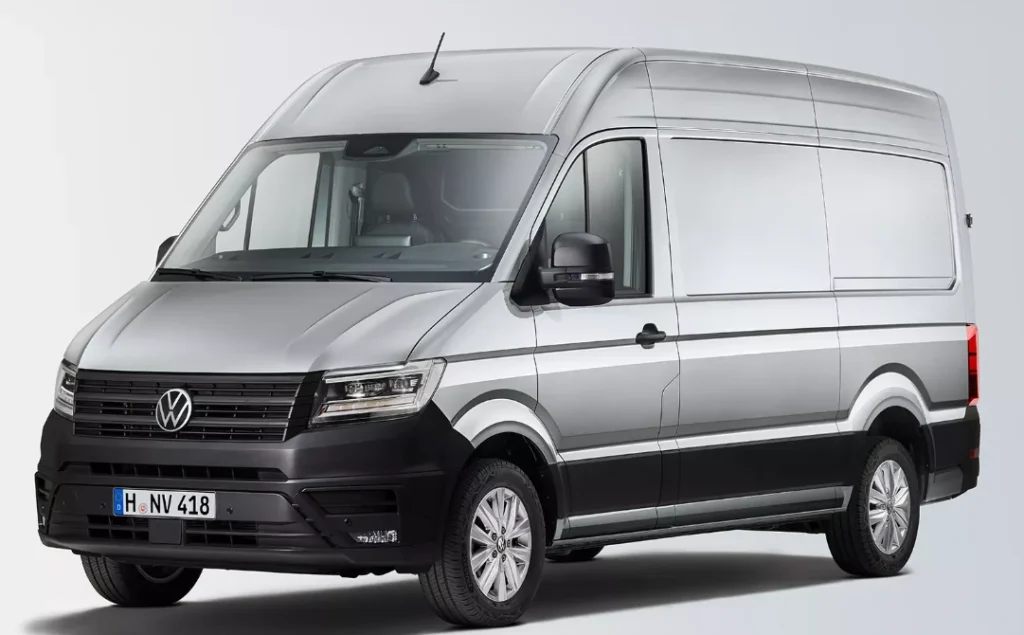
The Volkswagen Crafter is a popular full-size cargo van among European van lifers and is often seen as a more affordable alternative to the Mercedes Sprinter. It offers multiple wheelbase and roof options, strong payload capacity, and efficient diesel engines, making it well-suited for full-time van life builds.
The newer generation (2017+) — also sold as the MAN TGE — is especially popular for its improved driving comfort, modern interior, and overall refinement. While it’s not available in the US market, it remains a highly relevant option for van lifers across Europe and other regions.
Why Van Lifers Choose the Crafter
The Crafter offers many of the same advantages as the Sprinter — diesel efficiency, high-roof configurations, and long-distance comfort, but is often cheaper to buy and maintain in European markets. This makes it an appealing option for those who want a similar experience without paying a premium.
The driving experience is another strong point. Many owners describe it as stable and comfortable on long trips, which matters more over time if you’re living and traveling in the van full-time.
It also works well for conversions. The interior space is practical, payload capacity is strong, and the overall platform is well-suited for both DIY and professional builds.
Real-World Drawbacks of the Crafter
Like most modern diesel vans, the Crafter’s biggest challenge comes from its emissions system. Issues with components like the DPF, EGR, and AdBlue system are commonly reported. This is very similar to what many Sprinter owners experience, and the same general rule applies: these systems tend to work best when the van is driven regularly on longer highway trips.
Some owners choose to modify or remove parts of the emissions system to improve reliability, but this can come with legal and inspection issues depending on the country, so it’s something to be aware of before considering that route.
Rust is another concern, particularly on older (pre-2017) models. Areas like wheel arches, underbody components, and door tracks can develop corrosion over time. Newer models are improved, but rust prevention is still something many owners take seriously.
There are also occasional reports of electrical issues or expensive component failures (like injectors or turbo-related parts), but these are less consistent and not seen as a defining problem of the van.
Overall, the Crafter is considered a solid and reliable platform when maintained properly. The main tradeoffs are managing modern diesel systems and keeping an eye on rust over time — both of which are common across many vans in this category.
Volkswagen Crafter Specs:
- Wheelbase: 145″, 170″
- Roof options: Low, high
- Max interior height: ~5’5″–7’3″ (depending on roof options)
- Cargo volume: ~323–544 cu ft (depending on wheelbase and roof options)
- Payload: ~2,800–5,500 lbs
- Ground clearance: ~7.1–7.9 inches
- Engine: TDI turbo diesel
- Drivetrain: RWD / AWD (4Motion)
- Fuel economy: ~20–28 MPG
Pricing (2026):
- New (low roof): €42,000–€55,000
- New (high roof): €48,000–€75,000+
- Used (2020–2024): €28,000–€48,000
- Used (2017–2020): €18,000–€32,000
- Used (2017–2019): €12,000–€25,000
Full-Size Van Comparison Table
| Van Model | Engine Type | Drivetrain | Key Strength | Main Drawback |
|---|---|---|---|---|
| Mercedes Sprinter | Diesel | RWD / AWD | Best resale, strong aftermarket, efficient for long trips | Expensive repairs, complex systems, emissions issues |
| Ford Transit | Gas (mostly) | RWD / AWD | Easy to maintain, widely available, flexible configs | Rust (climate-dependent), some transmission concerns |
| Ram ProMaster | Gas | FWD | Widest interior, easiest to build, cheapest option | Transmission issues (older models), no AWD |
| Nissan NV Cargo | Gas (V6/V8) | RWD | Very reliable, simple mechanics, affordable used | Discontinued, poor fuel economy |
| Chevy Express / GMC Savana | Gas (V6/V8) | RWD | Durable, simple, still in production, large cargo space | Poor fuel economy, basic driving experience |
| VW Crafter | Diesel | RWD / AWD | Comfortable drive, good value in EU | Emissions system issues, rust (older models) |
Final Decision: Which Full-Size Cargo Van Should You Choose for Van Life?
We’ve covered the most popular models and other important details as we could. But the right van for you depends entirely on your own priorities: how much space you need, whether you want diesel efficiency or AWD, your budget for buying and maintaining, and how you’ll actually use it day to day. Any of these vans can become an incredible van life home with the right planning. So, take your time, test drive your top 2–3 favorites, stand inside, and walk the cargo area. Best of luck finding the best van for your van life adventure!
More Van Buying Guide For Van Life
If you want to know the pros and cons of new vs used vans, or want to know more about other van types and their best models, you can take a look at these guides:
New vs used vans for van life → A clear head-to-head comparison of upfront costs, long-term reliability, warranties, fuel efficiency, and which option truly saves money for you.
Used van buying guide for van life (2026) → Step-by-step advice on inspecting, evaluating, spotting red flags, and purchasing a used van without expensive regrets—essential for most budget-conscious buyers.
The 5 best van types for van life → A practical guide to choosing the right van based on fuel efficiency, space needs, and long-term travel goals.
Minivan buying guide for van life in 2026 → In-depth look on popular models (Sienna, Odyssey, Pacifica, etc.), AWD options, fuel economy, trims and specs if you’re leaning toward this affordable, easy-to-drive category.
Compact cargo van buying guide for van life in 2026 → An in-depth look at popular models such as the Mercedes-Benz Metris, GMC Savana, and Nissan NV200, along with their key specs, features, prices, pros, and cons.
Frequently Asked Questions
Which high-roof cargo van is best for van life in 2026?
There’s no single “best” van — it depends on your budget, build style, and priorities. The Mercedes Sprinter wins for reliability and resale value, the Ford Transit for service network and AWD availability, the Ram ProMaster for widest interior and lowest price, and the Express/Savana for maximum space on a budget. Test drive your top 2–3 and measure the interior to decide.
How much does a high-roof cargo van conversion cost in 2026?
A basic DIY conversion (bed platform, insulation, simple electrical, 200–400W solar) typically costs $5,000–$15,000. Full professional builds with plumbing, shower, and high-end solar can run $20,000–$50,000+. Starting with a used high-roof van keeps the total cost much lower than buying a ready-made camper.
Can you stand up fully in a high-roof cargo van?
Yes — most high-roof models give 6’2″ to 6’8″ of interior standing height (Sprinter and Transit reach up to 6’8″ in tallest configs). This lets you stand, cook, shower, and move around comfortably — the biggest upgrade over low-roof vans. Always check the exact roof height of the model and wheelbase you’re looking at.
Which high-roof van has the best fuel economy for long trips?
Diesel models like Mercedes Sprinter and Volkswagen Crafter are best for fuel economy, often giving 20–28 MPG real-world when loaded. Ford Transit and Ram ProMaster (gas) are around 15–19 MPG. The Chevy Express/Savana is lowest at 15–20 MPG. If long highway miles are your main driving, go diesel (Sprinter or Crafter).
Is AWD or 4×4 necessary for van life?
Not necessary if you mostly drive on paved roads or light gravel, but it’s a big help in snow, rain, or off-road campsites. Mercedes Sprinter and Ford Transit offer factory AWD/4×4, and VW Crafter has 4Motion. Ram ProMaster is FWD only, and Express/Savana is RWD only (aftermarket 4×4 possible but expensive).
Should I buy new or used for a high-roof van life build?
Used is usually smarter, especially if you are a beginner — you save $20K–$50K upfront, which can fund your entire conversion. Look for 2019–2024 models with clean history. New is better if you want the latest safety tech, warranty, or specific options (e.g., AWD), but prices are higher.
Which high-roof van is the most stealthy?
None of the high-roof vans are truly stealthy (they’re tall and stand out more than low-roof models). Still if you really want a stealthy high-roof option, the Ram ProMaster is often considered the stealthiest because it looks like a common delivery van. Add blackout window covers, plain paint, and no obvious solar panels to improve stealth.
What’s the cheapest high-roof cargo van for van life in 2026?
Used Chevrolet Express / GMC Savana (high-roof) is usually the cheapest — clean examples often sell for $8,000–$28,000. The Ram ProMaster is the lowest-priced new option (starting ~$45,000). Used Ford Transits (2018–2022) can also be found under $25,000 with higher miles.
Are high-roof vans reliable for full-time van life?
Yes — all five models are known for high-mileage reliability when maintained properly. Mercedes Sprinter and VW Crafter often last 300,000–500,000 miles (especially diesels), Ford Transit and Ram ProMaster are strong, and Express/Savana is legendary for 250,000–400,000+ miles. Regular oil changes and a pre-purchase inspection are key.