


Low-roof cargo vans are a great option to get started with van life, especially if you want to keep things simple. They blend in perfectly in cities and neighborhoods, don’t stand out like bigger high-roof vans, and are easy to drive and park. Most of the popular low-roof models for van life have been discontinued by the manufacturers, which means you can only buy them used. That’s actually a big advantage — used prices are very affordable, so you can save a lot of money and put more budget toward your conversion.
Since you’re here, we’re guessing you’ve already decided a low-roof cargo van is the right fit for your setup, but now you need help picking the best model. In this guide, we’ll walk you through the key features to look for when buying a low-roof cargo van, compare the most relevant models, along with their strengths and limitations. We hope that by the end of this guide, you will be able to pick the best model for your needs and preferences.
Look Out For These Features When Buying a Low-Roof Cargo Van
At first glance, most low-roof cargo vans look pretty similar — they’re boxy work vehicles designed to haul stuff. But when you start planning a van life conversion, small differences in roof height, payload capacity, window options, and layout flexibility can make a huge difference in how comfortable and practical your build turns out to be.
Trim Levels and Unnecessary Features
Low-roof cargo vans are built for work, so they have much simpler trim levels than passenger minivans — usually just 2 or 3 options like base (Work Van or Tradesman), mid (XLT, SV, SLT), and sometimes a higher one (Titanium or Premium).
Higher trims often add features like touchscreen infotainment, power windows and locks, cruise control, rearview camera, nicer cloth seats, alloy wheels, or even a bit of sound insulation. These can make long drives more enjoyable, but many van lifers end up stripping most of them out anyway — things like the bulkhead divider, extra seats (if any), carpet, or fancy trim panels just get in the way of building a flat bed platform, storage drawers, and off-grid setup.
Base or low trims give you a clean, solid starting point for van life: a reliable engine, basic safety features, and maximum cargo space, which leaves more of your budget for the actual conversion. Mid-level trims usually strike the best balance — they add useful daily-driving upgrades like power windows/locks, cruise control, and a simple audio system without piling on extras that add cost and weight for little real benefit.
So our recommendation would be to skip the highest trim unless you really want the extra comfort for long drives. Go for base or mid-level to keep things affordable and flexible for your build.
Drivetrain & Powertrain
For van life, your choice of powertrain (where the power is generated) and drivetrain (how that power gets to the wheels) affects fuel costs on long drives, traction on wet or gravel roads, and how practical the van is for daily use or off-grid living.
- Gas Powertrains: All low-roof cargo vans run on traditional gas engines — usually a 4-cylinder or V6 — which means simpler mechanics and lower upfront costs. You’ll pay more at the pump on long hauls compared to hybrids, but they’re reliable and easy to repair anywhere.
- Hybrid Powertrains: These are very rare in low-roof cargo vans — basically none are available in the models we cover here. If you really want hybrid efficiency, you’ll need to look at passenger minivans or step up to a full-size van.
- AWD (All-Wheel Drive) Drivetrains: AWD is also very uncommon in this class — most low-roof cargo vans are front-wheel drive (FWD) only, which is fine for city driving and light rain but can slip more in snow, mud, or loose gravel. A few rare configurations (like certain Metris or Express models) offered optional AWD in older years, but it’s not standard or widely available in 2025–2026 used examples.
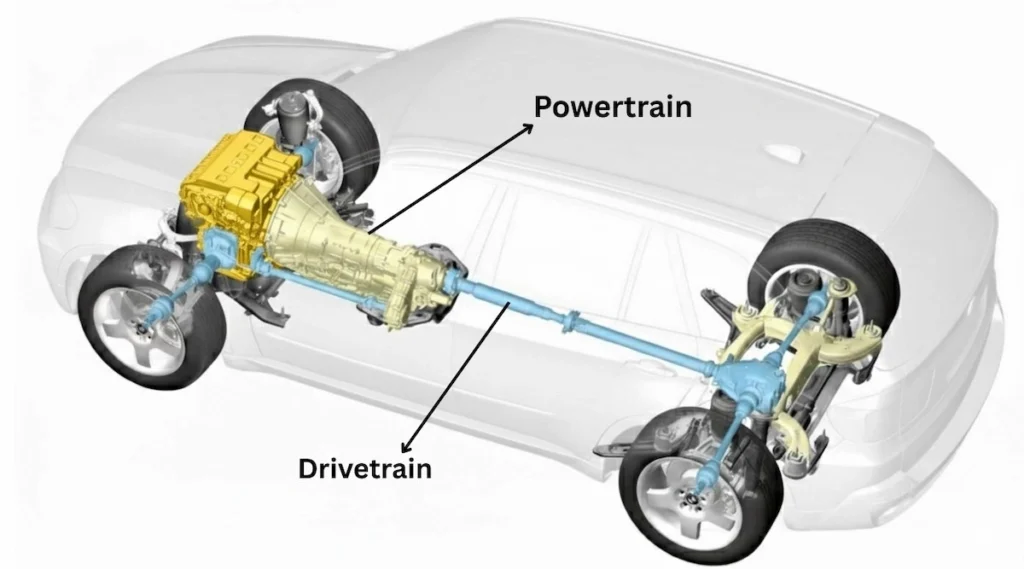
If AWD or hybrid is a must-have for your van life (snowy areas or long highway miles), you might need to look at minivans like the Toyota Sienna or step up to a high-roof van.
Ground Clearance
Low-roof vans are built for city streets and light work, so they sit low to make loading easier — but that means you can easily scrape on gravel paths, forest roads, or even deep snow when the van is loaded.
Most low-roof cargo vans have ground clearance between 5–7 inches (unloaded), which drops a bit when you add weight. Always test on similar terrain if possible, and consider all-season tires for better grip.
Here are the official approximate ground clearance figures for the popular models (2025–2026 used data from manufacturer specs and reviews):
- Ford Transit Connect (2014–2023 used): ~5.4–5.7 inches
- Nissan NV200 (2013–2021 used): ~6.1–6.4 inches
- Ram ProMaster City (2015–2022 used): ~5.1–5.4 inches
- Mercedes-Benz Metris (2016–2023 used): ~6.1–6.5 inches
- Chevrolet Express / GMC Savana (low-roof configs): ~6.5–7.1 inches
Low-roof cargo vans are great for stealth and easy driving, but their low clearance means careful route planning. If you want off-road access, high-roof vans are a better option.
Dimensions and Layout Potential
Most low-roof cargo vans share similar exterior dimensions — around 180–200 inches long, 70–75 inches wide, and 70–80 inches tall. Wheelbases range from 115–120 inches in most models. This makes them easy to drive, park in cities, and blend in without looking like a full camper.
Even though exteriors look almost the same, maximum cargo volume (behind the front seats, with no rear seats or bulkhead) differs quite a bit. For van life layouts, higher cargo volume and better interior length/height mean more room for a full-length bed platform, under-bed storage drawers, insulation, solar batteries, or gear like bikes/kayaks without feeling cramped. So remember to check cargo specs and test the space in person — lie down to see bed fit and measure from firewall to rear doors.
Below you can take a look at the official cargo volumes and key interior dimensions for each low-roof cargo van model:
- Ford Transit Connect: ~104–146 cu ft
- Nissan NV200: ~122–123 cu ft
- Ram ProMaster City: ~131–132 cu ft
- Mercedes-Benz Metris (low-roof): ~183–186 cu ft
- Chevrolet Express / GMC Savana (low-roof configs): ~200–239 cu ft

Payload Capacity & Weight Limits
Payload capacity is very important for van life because it tells you exactly how much extra weight your van can safely carry — things like insulation, bed platform, water tank, solar batteries, fridge, tools, and all your personal gear. Low-roof cargo vans are built for work, so they have higher payload ratings than passenger minivans, but the models still vary a lot.
Here are the approximate payload capacities for the popular models, based on manufacturer specifications and official brochures:
- Ford Transit Connect (2014–2023 used): ~1,000–1,570 lbs
- Nissan NV200 (2013–2021 used): ~1,480–1,500 lbs
- Ram ProMaster City (2015–2022 used): ~1,800–1,886 lbs
- Mercedes-Benz Metris (2016–2023 used, low-roof): ~2,200–2,500 lbs
- Chevrolet Express / GMC Savana (low-roof configs): ~2,500–3,100 lbs
If you plan a heavy build with lots of gear, go for higher-payload models like the Express/Savana or Metris. For lighter setups, the compact ones are still plenty capable.
Ford Transit Connect

The Ford Transit Connect (2014–2023 used models) is one of the most popular low-roof cargo vans for van life.
It has good fuel economy for a cargo van — around 24-27 MPG, so long drives don’t cost as much. Flat floor and removable bulkhead give you a clean canvas for builds — interior height ~49–60 inches allows sitting or partial standing beds. It is reliable and cheap to maintain — the 2.0L/2.5L 4-cylinder (162 hp) engines are durable, parts are easy to find, and many reach 200,000+ miles with basic care. Light off-road capability — ground clearance ~5.4–5.7 inches handles gravel or light dirt roads better than minivans.
Price ranges in 2026 (used market, based on current US listings and Kelley Blue Book/Edmunds data):
- Low-mileage (under 80,000 miles, 2020–2023 models): $20,000–$35,000
- Mid-mileage (80,000–150,000 miles, 2017–2020): $12,000–$22,000
- Higher-mileage or older (150,000+ miles, 2014–2017): $8,000–$15,000
Nissan NV200: The Ultra-Budget Stealth Pick
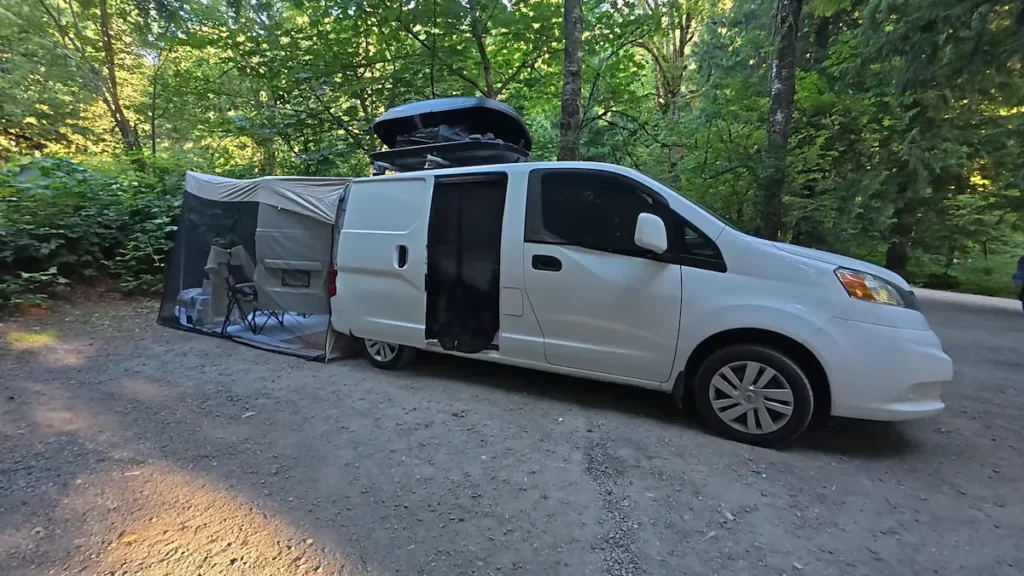
The Nissan NV200 (2013–2021 used models) is the cheapest low-roof van you can buy. It shines with its straightforward, dependable build and low running costs. The 2.0L 4-cylinder engine (131 hp) is quiet and efficient, hitting about 24 city / 26 highway / 25 combined MPG. The interior offers a flat, open floor once the bulkhead is removed, with around 53 inches of height. It has a ground clearance of ~6.1–6.4 inches. These vans are known for lasting well beyond 200,000 miles with regular maintenance, and replacement parts are inexpensive and easy to source.
It has some drawbacks too. Cargo space tops out at about 122–123 cu ft, so it suits solo travelers or light builds best. Since production ended in 2021, you’re limited to the used market, so inspect carefully for rust or wear on higher-mileage units.
Price ranges in 2026 (used market, based on current US listings, Kelley Blue Book, and Edmunds data):
- Low-mileage (under 80,000 miles, 2019–2021 models): $12,000–$18,000
- Mid-mileage (80,000–150,000 miles, 2016–2019): $8,000–$14,000
- Higher-mileage or older (150,000+ miles, 2013–2016): $5,000–$10,000
Ram ProMaster City
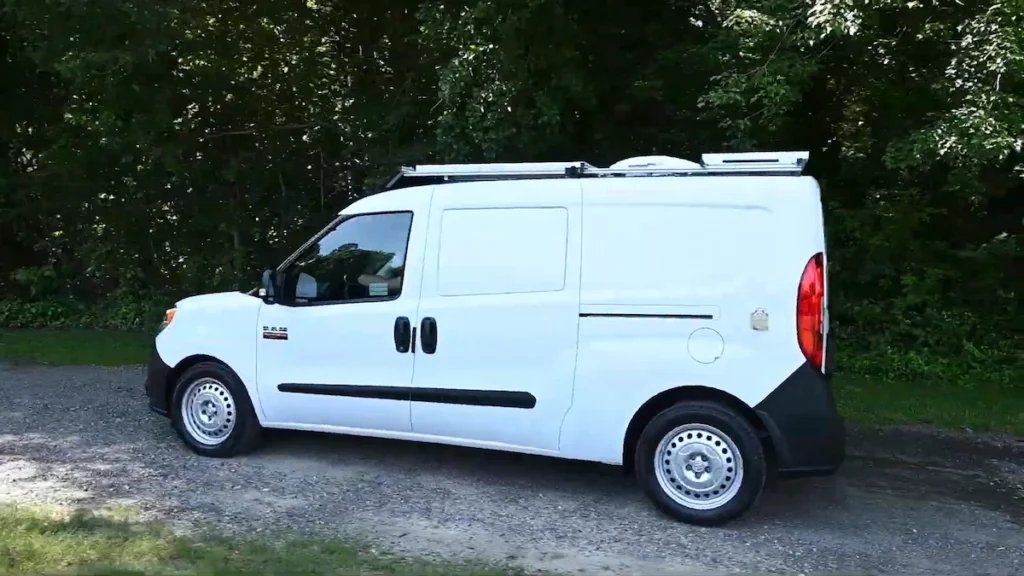
The Ram ProMaster City (2015–2022 used models) is a solid pick for van lifers who want more width and payload in a compact low-roof package. It was built on the Fiat Doblo platform and feels noticeably roomier side-to-side than the Transit Connect or NV200, making it easier to fit a comfortable bed layout or extra storage cabinets.
Its 2.4L 4-cylinder engine (178 hp) delivers around 21–28 MPG. The interior is a wide, open box with a flat floor and height is around 51 inches. Payload is one of the best in the compact class at ~1,800–1,886 lbs, so you can add solar panels, water tank, and gear without hitting limits quickly. Reliability is good overall, with many owners reporting 150,000–250,000 miles with routine care.
On the downside, ground clearance is lower at ~5.1–5.4 inches, so it’s best for paved or smooth gravel roads — avoid rough trails. Side windows are limited in cargo trims, which boosts stealth but reduces natural light.
Price ranges in 2026 (used market, based on current US listings, Kelley Blue Book, and Edmunds data):
- Low-mileage (under 80,000 miles, 2020–2022 models): $14,000–$22,000
- Mid-mileage (80,000–140,000 miles, 2017–2020): $9,000–$16,000
- Higher-mileage or older (140,000+ miles, 2015–2017): $6,000–$11,000
Mercedes-Benz Metris
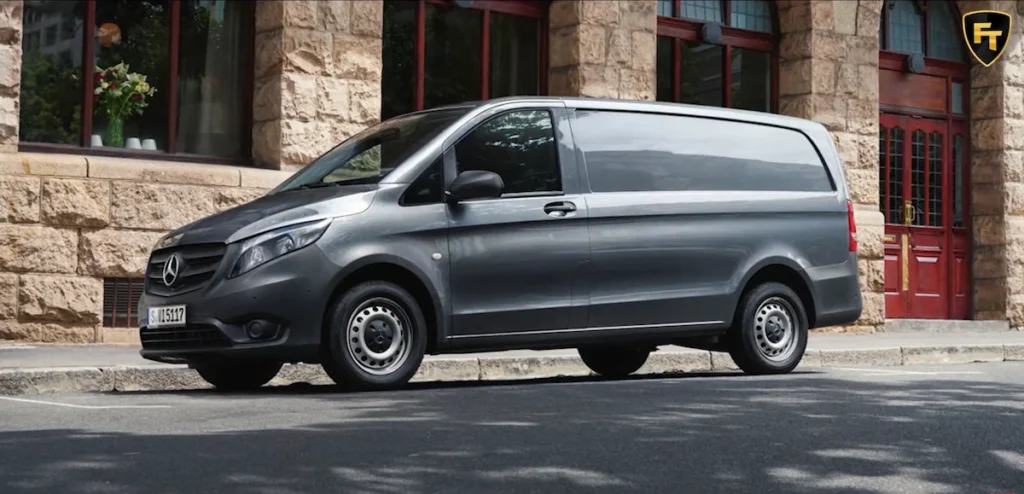
The Mercedes-Benz Metris (2016–2023 used models) is a step up in build quality and refinement. It feels more upscale than the American compacts, with a smoother ride and better materials, while still keeping a stealthy work-van look from the outside.
Its 2.0L turbo 4-cylinder engine (208 hp) is strong and efficient, delivering about 21 city / 24 highway / 22 combined MPG. Payload is excellent at ~2,200–2,500 lbs, giving you room for heavier off-grid setups. Mercedes engineering means these vans often last well past 200,000 miles with proper care.
Its only downside is parts and repairs cost more than domestic vans, though reliability is strong.
Price ranges in 2026 (used market, based on current US listings, Kelley Blue Book, and Edmunds data):
- Low-mileage (under 80,000 miles, 2020–2023 models): $22,000–$35,000
- Mid-mileage (80,000–140,000 miles, 2018–2020): $16,000–$25,000
- Higher-mileage or older (140,000+ miles, 2016–2018): $12,000–$20,000
Chevrolet Express / GMC Savana (Low-Roof)
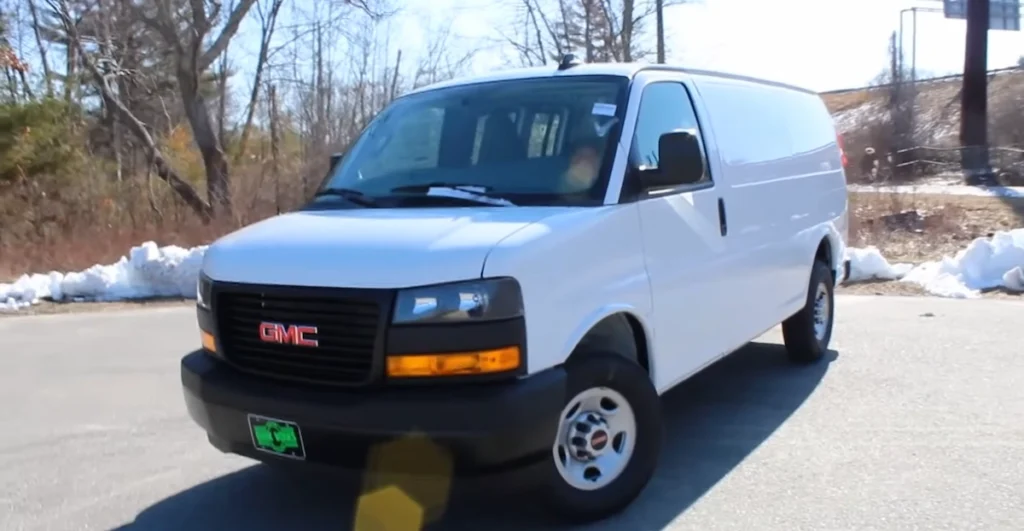
The Chevrolet Express and GMC Savana (low-roof configurations) are actually the same van — just sold under two different GM brand names. They share identical engines, chassis, dimensions, and performance. The only differences are the grille, badging, and very minor trim details (GMC usually looks a bit more premium). Most van lifers shop both and pick whichever is cheaper or in better condition.
Its engines are strong and proven — usually a 4.3L V6 (276 hp) or optional 6.6L V8 (401 hp) — with MPG around 15–20 combined depending on setup. The interior is huge with a cargo volume of ~200–239 cu ft and height is about 52–53 inches. Payload is the highest here at ~2,500–3,100 lbs, so you can load it with heavy solar, water, batteries, and gear without any worry. These vans are built to last, with many examples reaching 250,000–400,000 miles with regular maintenance.
Drawbacks include lower fuel economy than the compacts, higher running costs, and a bigger footprint that’s less ideal for tight urban parking.
Price ranges in 2026 (used market, based on current US listings, Kelley Blue Book, and Edmunds data):
- New (limited availability): $42,200–$48,000+
- Used: $8,000–$40,000 (depending on year and mileage)
If you need the most interior space and payload in a low-roof van for a heavier or more comfortable build, the Chevrolet Express / GMC Savana is the go-to. It’s ideal for van lifers who prioritize room over maximum stealth or fuel savings.
Final Decision: Which Low-Roof Cargo Van Should You Choose for Van Life?
You’ve now got a clear picture of what these vans offer — from payload and stealth to real-world prices and conversion potential. We’ve shared the most important details so you can compare them yourself.
And the right choice is completely up to you. Think about your daily routine, how much gear you plan to carry, whether stealth is your top priority, and how much you’re comfortable spending upfront. The best van is the one that feels practical when you sit in it, walk around the cargo area, and imagine your bed and setup inside.
Best Low-Roof Cargo Vans For Van Life-: FAQs
What is the best low-roof cargo van for van life in 2026?
There is no single “best” model — it depends on your needs. The Ram ProMaster City or Mercedes Metris are great if you want more width and payload. The Nissan NV200 wins for pure budget and stealth. The Ford Transit Connect is ideal for easy daily driving, and the Chevy Express / GMC Savana (low-roof) is best when you need maximum space and heavy loading. Test drive and measure the cargo area to decide.
How much does a low-roof cargo van conversion typically cost?
A basic DIY conversion (bed platform, insulation, simple storage, 200–400W solar, and basic electrical) usually runs $3,000–$9,000. Adding a fridge, water system, or better solar can push it to $10,000–$15,000. Starting with a used low-roof van keeps the total cost much lower than buying a ready-built camper.
Can you sleep comfortably in a low-roof cargo van?
Yes — most models give 70–100+ inches of flat length after removing the bulkhead, enough for a full-size or queen mattress. Interior height is 49–60 inches, so you’ll have sitting or kneeling beds (no full standing room). The Ram ProMaster City and Metris feel the roomiest side-to-side for couples.
Which low-roof cargo van has the best fuel economy?
The Nissan NV200 and Ford Transit Connect are the most efficient, both getting around 24–27 MPG combined (official EPA figures). The Ram ProMaster City is close at ~24 MPG, while the Metris and Express/Savana drop to 15–22 MPG.
How much payload can low-roof vans actually carry for van life?
Payload varies a lot:
- Transit Connect: 1,000–1,570 lbs
- NV200: ~1,480–1,500 lbs
- ProMaster City: 1,800–1,886 lbs
- Metris: 2,200–2,500 lbs
- Express/Savana low-roof: 2,500–3,100 lbs
Always check the door sticker on the specific van — heavy solar, water, and batteries add up fast.
Is AWD or hybrid available in low-roof cargo vans?
AWD and hybrid options are extremely rare in this class. Almost all low-roof cargo vans are front-wheel drive with gas engines only. A few older Metris or Express models had optional AWD, but they’re hard to find. If you need AWD or hybrid efficiency, consider a minivan like the Toyota Sienna instead.
What’s the cheapest low-roof cargo van for van life right now?
The Nissan NV200 is usually the most affordable — clean examples often sell for $5,000–$12,000. The older Ford Transit Connect and Chevy Express/Savana (low-roof) can also be found under $10,000 with higher miles. Always budget extra for inspection and basic conversion work.
Are these vans reliable for full-time van life?
Yes — all five models are known for high-mileage reliability when maintained properly. The Nissan NV200 and Ford Transit Connect frequently reach 200,000+ miles. The Express/Savana and Metris are also strong, though the Metris costs more for parts. Regular oil changes and a pre-purchase inspection are the best ways to avoid problems.