


There isn’t a universally better option between new vs used. But there is a smarter choice depending on your situation. The wrong decision can quietly eat into your budget, slow down your build, or make existing van life harder than expected. The right one gives you flexibility and fewer surprises.
Choosing between a new or used van for van life usually comes down to three things: how much you can spend, how comfortable you are with uncertainty, and how long you realistically plan to live on the road.
In this post, we take a deep dive on new vs used vans specifically for van life. Not general car buying. The goal is to help you understand where the real trade-offs show up so you can choose a van that fits your plans instead of working against them.
Why the Decision of Buying a New or Used Van Is More Important Than the Van Itself
Before you get lost in comparing van models, roof heights, or wheelbases — the first and most important decision is whether to buy a new or used van. It affects how much money you’ll need upfront, how you approach the build, how soon you can get on the road, and how much risk you’re taking on mechanically. It also affects how easy it will be to change course later if your plans shift.
This is why experienced van buyers decide new vs used first and narrow down models later. After deciding whether to buy a new or used van, you can start looking for a model that fits your needs — considering size, layout, fuel economy, and reliability. If you’re buying used, focus on finding models in good condition; if new, explore dealership options and available warranties.
The Real Cost Differences Between New vs Used Vans (Beyond the Purchase Price)
When comparing a new vs used van for van life, the sticker price is just the starting point. The real difference shows up in how much you spend before you ever leave — and what your ongoing costs look like once you’re living in the van.
Base Van Price
New vans cost more upfront, but they come with warranty coverage that protects you from repair costs in early years. They’re also easier to finance, which lowers the initial cash required but increases the total cost over time.
Used vans look cheaper because of their lower purchase price, but they aren’t always cheaper in the long run. Two vans with the same price can have very different maintenance histories and future repair needs. Initial repairs, upgrades, and long-term maintenance costs are important factors to keep in mind.
Conversion Cost Differences
The condition of the van plays a big role in how much you’ll spend converting it into a livable space.
A new van gives you a clean slate. Planning insulation, electrical, and layout is simpler, and you’re less likely to spend money fixing problems before the build even starts. At the same time, starting from scratch means higher overall build costs.
Used vans can go either way. Some require repairs before you can even begin the build. Older components may limit design options, and existing wear can increase labor and material costs. Rust treatment, suspension work, outdated wiring, or undoing poorly done modifications can quietly inflate your budget. In other cases, a used van already has a build that fits your needs, which can save a lot of time and money.
Financing, Insurance, and Cash Flow
Beyond the purchase and build, your choice also affects monthly expenses — which directly impacts how sustainable van life feels day to day.
New vans are generally easier to finance and often qualify for lower interest rates. Used vans may require higher rates or larger down payments. Financing reduces upfront strain, but it locks you into monthly payments for years.
Insurance is usually more expensive on new vans and cheaper on used ones, though coverage depends on financing requirements and build value.
From a budget perspective, higher monthly payments limit flexibility, while lower fixed costs leave more room for travel. With used vans, unexpected repairs are the bigger risk. With new vans, the risk is carrying higher payments for longer. The better option depends on which trade-off you’re more comfortable with.
Reliability, Repairs, and Downtime on the Road
Reliability matters more in van life than in normal vehicle ownership. When a van breaks down, you’re not just dealing with transportation issues — you’re dealing with losing your home, power, and mobility at the same time.
New vans tend to be more reliable in the early years, with fewer unexpected failures and warranty coverage that can reduce repair stress. Used vans can still be reliable, but much more depends on their condition and maintenance history.
New Vans: Warranty vs Reality
A new van can be reliable, but that depends on what the warranty really covers—and what it doesn’t.
Most factory warranties cover major mechanical components and manufacturer defects within a limited time or mileage window. Once you start modifying the van, things start to get complicated. Drilling, cutting, or altering systems can void certain parts of the warranty, and conversions themselves are not covered.
It’s also worth knowing that “new” doesn’t mean problem-free. New models can have recalls or early production issues. Modern vans rely heavily on sensors, emissions systems, and electronics, which can fail and often require dealership visits to fix. That means downtime while traveling.
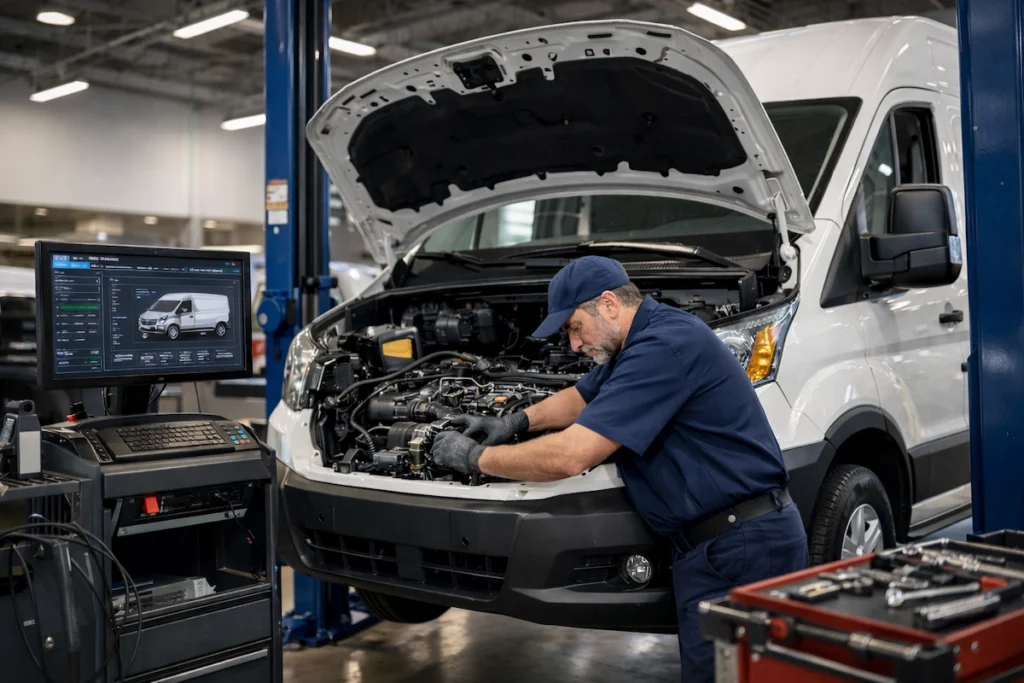
A new van reduces uncertainty, but it doesn’t eliminate interruptions — especially after the build is complete.
Used Vans: Risk vs Proven Track Record
Used vans involve more variability, but risk isn’t just about mileage. Many well-maintained vans remain reliable well past 150,000 to 200,000 miles. Highway use is usually easier on a vehicle than stop-and-go city driving, and consistent service records often tell you more than the odometer alone.
The real risk comes from unknowns. Vans with documented repairs and known platform issues are more predictable. While vans with missing records or vague histories carry more uncertainty and higher potential costs.
In some cases, used vans can actually be easier to predict than new ones. Known problem areas may already be fixed, electronics are often simpler, and repair options can be more widely available. This doesn’t mean older vans are always more reliable — just that their failure patterns are better understood.
Depreciation, Resale Value, and Your Van Life Exit Strategy
Van life isn’t always permanent. Many people try it for a year or two, make adjustments, or eventually move on. That’s why resale value matters more here than it does with a normal vehicle. New vans starts to lose value as soon as it leaves the lot, and loses most of it’s value in the first few years. Used vans have already gone through most of that depreciation, so they can often be resold closer to their purchase price — especially if you bought at a fair price and kept the van in good condition.
If you plan to keep the van long-term, this matters less. But if you’re unsure how long you’ll continue with van life, used vans generally carry less financial risk.
The “Try Van Life, Then Upgrade” Strategy
Many first-time buyers start with a used van to test the lifestyle before making a bigger investment. This gives you time to figure out what you actually need—how much space you use, whether you need a high roof, how you handle cooking, sleeping, and storage on the road.
Instead of guessing everything upfront, you learn from real experience. If you decide to continue long-term, you can upgrade later with a clearer idea of what works for you. This approach reduces financial risk and helps avoid over-investing in a setup that may not fit your actual lifestyle.
Customization, Builds, and Long-Term Flexibility
How you plan to live in your van matters just as much as the van itself. Buying new or used affects how much control you have over the layout and how easily the setup can evolve over time.

New Vans: The Blank Slate Advantage
A new van gives you full control from day one. There are no existing walls, cabinets, or holes to work around. Layout planning is simpler, and it’s easier to design around your height, routines, and travel style.
Modern electrical systems, batteries, and solar integrate more cleanly, wiring routes are easier to plan, and there’s less risk of inheriting outdated components. New vans also work well for phased builds that evolve over time, especially if you plan to live in the van full-time.
Used Vans: When Existing Builds Help (or Hurt)
Used vans can be a shortcut — or a problem — depending on the quality of the existing build.
A pre-built van makes sense if the layout fits your needs, the work was done cleanly, and the systems are properly sized and still supported. In those cases, you can get on the road much faster.
But poor workmanship, undocumented modifications, or outdated electrical systems can turn an existing build into a liability. Removing a bad conversion often costs more than starting fresh.
Evaluating a used build means checking wiring quality, mounting safety, moisture issues, and being honest about whether you’d design the same setup yourself. If it doesn’t match how you plan to live, it’s not a bargain — it’s a compromise.
Time to Hit the Road: New vs Used Vans
Timeline is one of the most overlooked factors in this decision, which means the difference between weeks and many months.
New Vans: Wait Times and Build Reality
New vans often come with delays. Popular models may have long factory wait times, limited inventory, or unavailable trims. After delivery, builds — especially DIY ones — usually take longer than planned. Professional conversions can take several more months than DIY.
New vans offer control and customization, but they rarely get you on the road quickly. They work best for people planning long-term who aren’t in a rush.
Used Vans: Faster Path to Traveling
Used vans skip factory delays entirely. Pre-built vans can be road-ready immediately, and even empty used vans are available to start building right away. If starting sooner matters more than perfect customization, used vans are the faster option.
New vs Used Vans for Van Life: Side-by-Side Comparison
This comparison table below will help you summarise all the main trade-offs between buying new and used, that we covered in detail so far.
| Factor | New Van | Used Van |
|---|---|---|
| Upfront cost | Cost more but are predictable | Cost less, but condition varies |
| Reliability | Fewer unknowns early on | Depends heavily on maintenance history |
| Time to hit the road | Usually takes longer | Often ready much sooner |
| Build flexibility | Full customization | May be limited by prior wear or builds |
| Resale value | Depreciates faster early | Often resells closer to purchase price |
| Best fit | Long-term planners | First-timers, faster starters, and budget-focused buyers |
Final Decision: Should You Buy a New Van or a Used Van?
We have covered as much as we could to explain the pros and cons of buying used or new, but the final decision is yours to make. There’s no single right answer. The better choice depends on your budget, your timeline, and how much uncertainty you’re willing to manage.
A new van makes sense if you plan to live in it long-term, want full control over the build, are comfortable with higher upfront costs, and don’t mind waiting. Warranty coverage and predictability matter more than resale flexibility in this case.
A used van makes sense if you want to start sooner, need to limit upfront risk, value an easier exit, or prefer lower monthly costs. It also works well if you’re open to adapting an existing setup and upgrading gradually.
Keeping these basics in mind can save you money and prevent setbacks. Small oversights when buying a used van can become big problems once you’re living in it. If you’re leaning toward used, our detailed used van buying guide for van life walks through inspections, red flags, and practical checks to help you get the best value without surprises.
Read Next To Choose Your Perfect Van
After deciding between a new or used van, the next step is choosing the right type and model based on your needs. These guides can help you make a more informed buying decision:
The 5 best van types for van life → A practical guide to choosing the right van based on fuel efficiency, space needs, and long-term travel goals.
Minivan buying guide for van life in 2026 → In-depth look on popular models (Sienna, Odyssey, Pacifica, etc.), AWD options, fuel economy, trims and specs if you’re leaning toward this affordable, easy-to-drive category.
Compact cargo van buying guide for van life in 2026 → An in-depth look at popular models such as the Mercedes-Benz Metris, GMC Savana, and Nissan NV200, along with their key specs, features, prices, pros, and cons.
Full-size cargo van buying guide for van life in 2026 → An in-depth look at popular models such as the Mercedes-Benz Sprinter, Ram ProMaster, and Ford Transit, along with their key specs, features, prices, pros, and cons.
Used van buying guide for van life (2026) → Step-by-step advice on inspecting, evaluating, spotting red flags, and purchasing a used van without expensive regrets—essential for most budget-conscious buyers.
New vs Used Vans for Van Life: FAQs
Do new vans make van life easier?
New vans can make van life easier at the start because they have fewer unknowns, modern systems, and warranty coverage. However, they often come with higher costs, longer wait times, and more complexity once converted. Easier doesn’t always mean better—it depends on your budget, timeline, and experience level.
How long do vans typically last for van life?
Most vans used for van life can last 200,000–300,000 miles with proper maintenance. Longevity depends more on maintenance history, driving conditions, and platform reliability than age alone. A well-maintained used van can last just as long as a newer one.
Are used vans reliable for full-time van life?
Yes, used vans can be very reliable for full-time van life if they’re well maintained and properly inspected. Service history, known platform issues, and overall condition matter more than mileage alone. Many full-time van lifers successfully live in used vans for years.
What are the disadvantages of buying a new van for van life?
The main downsides of buying a new van are higher upfront cost, faster early depreciation, longer wait times, and potential warranty limitations after conversion. New vans also rely heavily on electronics, which can be harder to diagnose and repair on the road.
Is buying a used camper van worth it?
Buying a used camper van is often worth it if you want to save money and start traveling sooner. Used vans usually depreciate less and can resell closer to the purchase price. The key is choosing one with a solid maintenance history and realistic condition.
Is it cheaper to build out a new van or a used van?
It’s usually cheaper overall to build out a used van, especially if the base vehicle is in good condition. While new vans offer a clean slate, their higher purchase price and financing costs often outweigh build savings. Used vans can free up more budget for the conversion itself.
Do new vans break down less than used vans?
New vans typically have fewer issues early on, but they’re not problem-free. Recalls, sensor failures, and electronic issues still happen. Used vans may break down more often, but their problems are often more predictable if the platform is well documented.
Should first-time van lifers buy new or used?
Most first-time van lifers are better off buying used. Used vans offer lower financial risk, easier resale, and more flexibility if van life doesn’t go as planned. New vans make more sense for long-term commitments with a clear build plan and budget.
How many miles is too many miles on a used van for van life?
There’s no fixed number, but many vans remain viable well past 150,000–200,000 miles with good maintenance. Highway miles and service records matter more than the odometer alone. Poor maintenance at low mileage can be riskier than high mileage with good care.
Is it better to buy a new or used van for van life?
There’s no single best option. New vans offer customization and fewer unknowns, while used vans offer lower cost, faster start times, and better resale flexibility. The better choice depends on your budget, timeline, and how long you plan to live in the van.
Does converting a van void the warranty on a new van?
A conversion doesn’t void the entire warranty, but it can affect coverage. Drilling, cutting, or modifying systems can void warranty claims related to those components. Manufacturer warranties usually don’t cover electrical, plumbing, or interior build work.
Is it harder to resell a converted van?
It can be, depending on the build. Highly personalized layouts may appeal to fewer buyers, while simple, functional builds often resell more easily. Used vans with flexible or minimal conversions usually hold resale value better than heavily customized ones.
Are older vans cheaper to maintain for van life?
Older vans can be cheaper to maintain due to simpler systems and easier diagnostics. Parts are often more available, and repairs can be done without specialized tools. However, maintenance costs depend heavily on condition, not age alone.
Is high mileage bad for a van conversion?
High mileage isn’t automatically bad for a van conversion. A well-maintained van with higher mileage can be a solid foundation, while a low-mileage van with poor care can be risky. Condition, service history, and platform reliability matter more than mileage alone.